Author: Jim Bibb

  • The Origin of Covenant: Why Humanity Needed a Path of Return

    Jim Bibb

    Sep 02, 2026


    Most people begin the story of Messiah in the New Testament. Yet Scripture begins His story much earlier, in Eden, in the moment humanity lost its original glory and the Father established the need for covenant.

    Chapter 2 of Israel Divided: Why Jesus Came reveals this foundation: Covenant begins with the withdrawal of glory, the giving of skin, and the rise of blood as the legal medium of restoration.

    Thanks for reading! Subscribe for free to receive new posts and support my work.Subscribe

    This is where the story truly begins.

    1. Humanity Was Originally Clothed in Light

    Before we look at the transformation from light to skin, it helps to know that Scripture uses a deliberate Hebrew wordplay here. Two different Hebrew words sound identical when pronounced as “or” but are spelled differently and mean very different things. One is light (spelled with the Hebrew letter aleph, אוֹר) and the other is skin (spelled with the Hebrew letter ayin, עוֹר).

    This wordplay is intentional and foundational to understanding covenant.

    Genesis 3:21 says the Father made “garments of skin” for Adam and Eve. Before the fall, they were clothed in light (אוֹר), radiant coverings reflecting the Father’s presence. Psalm 8 describes humanity as crowned with glory and honor, ruling over the works of His hands.

    Humanity was created to bear divine glory. When Adam and Eve sinned, the Father withdrew His fullness. Not in anger but in mercy. No will contrary to His can exist in His presence.

    The withdrawal of glory transformed humanity:

    · from beings of light (אוֹר)

    · into beings clothed in skin (עוֹר)

    This “skin” was not animal hide. It was human flesh itself, a new condition designed to contain blood, which in a fallen world became:

    · humanity’s lifeforce

    · and the legal currency of covenant

    This is why Adam and Eve felt naked. The glory was gone.

    2. Humanity Could No Longer Endure the Father’s Fullness

    Genesis 3:8 says Adam and Eve heard “the voice of YHWH Elohim walking.” The Hebrew emphasizes qol, voice, not a physical form. The ancient Aramaic Targums make this explicit:

    “They heard the voice of the Word of the Lord God.”

    Humanity could no longer endure the Father’s fullness. So the Word, the Memra, appeared as His representative, bearing His Name and authority.

    This moment reveals the new reality:

    · humanity in skin

    · the Father withdrawn

    · the Word mediating

    · blood becoming the legal means of restoration

    This is the foundation of covenant.

    3. Covenant Means Cutting and Restoration

    The Hebrew word berit (covenant) carries two meanings at its root:

    · bara — to cut, to open

    · barah — to rejuvenate, to restore

    Covenant is both incision and renewal.

    Humanity clothed in skin and blood requires covenant to be reconciled and returned to glory. The cut accesses the blood. The blood restores.

    After Eden, covenant becomes the Father’s blueprint for humanity’s return.

    4. Light, Skin, Blood, and the Image of God

    Genesis 1 says humanity was created in the image of God.

    In His eternal form, Messiah is a being of light, the same light spoken in Genesis 1:3.

    Chapter 2 of Israel Divided: Why Jesus Came explains the pattern:

    · Humanity in Eden: clothed in light, reflecting divine glory

    · Humanity after the fall: clothed in skin, containing blood

    · Messiah before taking on flesh: the Word appearing in created time and space, bearing the Father’s Name and authority

    · Messiah in human flesh: the Word entering skin and shedding blood to restore humanity

    The flesh and blood given to Adam and Eve anticipate the flesh and blood of Messiah. What humanity lost, Messiah restores.

    Closing Thought

    Covenant is not sentiment. It is the Father’s legal and relational blueprint for reconciliation. Chapter 2 reveals the moment that blueprint became necessary, when humanity lost glory, received skin and blood, and could no longer endure the Father’s fullness. From that point forward, covenant became the path of return.

    This is the beginning of the restoration story Israel Divided: Why Jesus Came unfolds chapter by chapter.
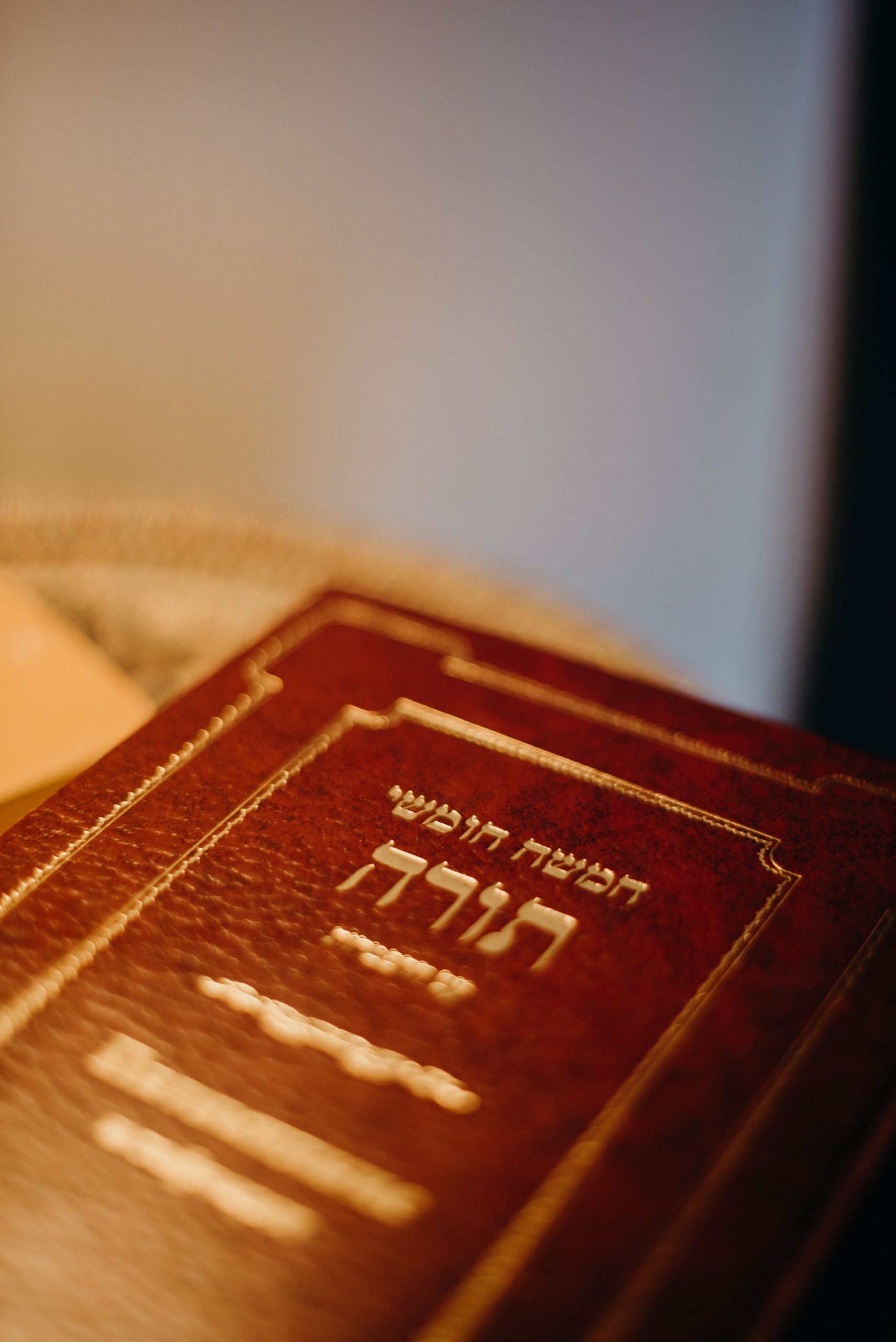
  • The Jewish View of Messiah in the Second Temple Period and Scripture’s Revealing of Him Beginning in Genesis 1

    The Jewish View of Messiah in the Second Temple Period and Scripture’s Revealing of Him Beginning in Genesis 1

    Jim Bibb

    Aug 26, 2026

    Most people who study the Bible meet the Messiah for the first time in the book of Matthew. Yet the world He stepped into, and the expectations surrounding Him, were shaped long before the Gospels were written. To understand Yeshua, the Hebrew name of the one the Christian world refers to as Jesus, we have to understand Jewish messianic thought of the Second Temple period. To understand it, we have to go even further back, into the Hebraic and ancient Near East world that shaped it.

    This is where the conversation begins.

    Messianic Hope Was Not One Thing: It Was Many

    When we talk about “Jewish expectations of Messiah,” we often imagine a single, unified idea. Yet the Jews in the Second Temple period didn’t have one view of Messiah. They had several, shaped by Scripture, suffering, exile, empire, and longing.

    Different communities emphasized different aspects of the biblical story. The result was a rich, complex landscape of hope, not a single definition.

    Here are the major messianic models circulating just before Yeshua arrived.

    1. The Davidic King: The Warrior-Restorer

    (Psalms of Solomon 17; 2 Samuel 7)

    This was the most familiar expectation. A son of David who would:

    • defeat Israel’s enemies
    • restore the throne
    • purify the land
    • establish justice
    • bring peace

    This Messiah was royal, political, and national; a king who would set Israel free from Rome and restore the kingdom. Many expected this Messiah to be unmistakably powerful, victorious, and visible.

    2. The Priestly Messiah: The Temple-Restorer

    (Dead Sea Scrolls: 1QS; 1QSa)

    The Dead Sea Scrolls reveal another expectation: a priestly Messiah.

    This figure would:

    • cleanse the Temple
    • restore true worship
    • teach righteousness
    • intercede for the people
    • lead Israel into covenant faithfulness

    Some communities even expected two Messiahs, one royal, one priestly, working together. This Messiah was less about military victory and more about spiritual restoration.

    3. The Prophetic Messiah: The New Moses

    (Deuteronomy 18:15–19)

    Deuteronomy 18 promised a prophet “like Moses,” and many Jews expected a Messiah who would:

    • speak God’s words with authority
    • confront corrupt leadership
    • lead a new exodus
    • renew the covenant

    This Messiah would be a teacher, a reformer, and a liberator; not through war, but through revelation.

    4. The Apocalyptic Son of Man: The Heavenly Judge

    (Daniel 7; 1 Enoch 37–71; 4 Ezra 13)

    Texts like Daniel 7, 1 Enoch, and 4 Ezra shaped a powerful expectation of a heavenly Messiah:

    • descending in glory
    • judging the nations
    • overthrowing evil
    • ruling forever

    This Messiah was cosmic, transcendent, and unstoppable; a divine agent who would bring the final restoration.

    5. The Suffering Servant: The Rejected Redeemer

    (Isaiah 52–53)

    This was the least popular view, but it existed. Some saw Isaiah’s Servant as a messianic figure who would:

    • suffer on behalf of the people
    • be rejected
    • be vindicated by God
    • bring healing through sacrifice

    This Messiah was not widely embraced, but the idea was present in the Jewish imagination.

    Why This Matters for Understanding Yeshua

    Yeshua didn’t appear in a vacuum. He stepped into a world already full of messianic expectation, but He didn’t fit neatly into any single category. Instead, He fulfilled or will fulfill all of them, but not in the expected order.

    He:

    • teaches like Moses
    • heals like Elijah
    • suffers like the Servant
    • dies like the righteous martyr (Wisdom of Solomon 2)
    • rises like the Son of Man
    • intercedes like the Priest
    • reigns like David

    This is why so many people were confused, and why so many were drawn to Him. He was familiar, yet unexpected. Scriptural, yet surprising. Jewish, yet transcendent.

    Yet there’s a deeper layer still.

    The Missing Piece: Messiah’s Story Begins in Genesis

    The Second Temple messianic imagination didn’t appear out of nowhere. It grew out of the older story, the one that begins in Genesis. Before David, before Moses, before the prophets, before exile, before Rome…

    there is:

    • the Word who creates (Genesis 1; Psalm 33:6)
    • the Voice who walks (Genesis 3:8)
    • the Name-Bearer of the Father who appears (Exodus 23:20–22)
    • the Messenger who speaks as if the Father is speaking (Genesis 16; Genesis 22)
    • the Seed who will crush the serpent (Genesis 3:15)
    • the Image who reveals the Father (Genesis 1:26–27)
    • the Shepherd who guides (Genesis 48:15; 49:24)
    • the Redeemer who rescues (Genesis 48:16)

    Messiah’s story doesn’t begin in Matthew or even in the prophets. It begins in Genesis 1. The Second Temple Jewish world, with all its messianic hopes, was trying to make sense of that older story.

    Why I’m Writing About This

    I want to start a conversation about the Messiah the Jewish world was expecting, and the Messiah that Scripture has been revealing from the very beginning. Understanding the Second Temple messianic landscape helps us understand Yeshua.

    Understanding His role beginning in Genesis helps us understand more accurately why He came. If we want to see the Messiah clearly, we have to see Him through the eyes of the people who were waiting for Him, and through the story He has been telling since the beginning.

    Let’s explore that story together.