Category: Uncategorized

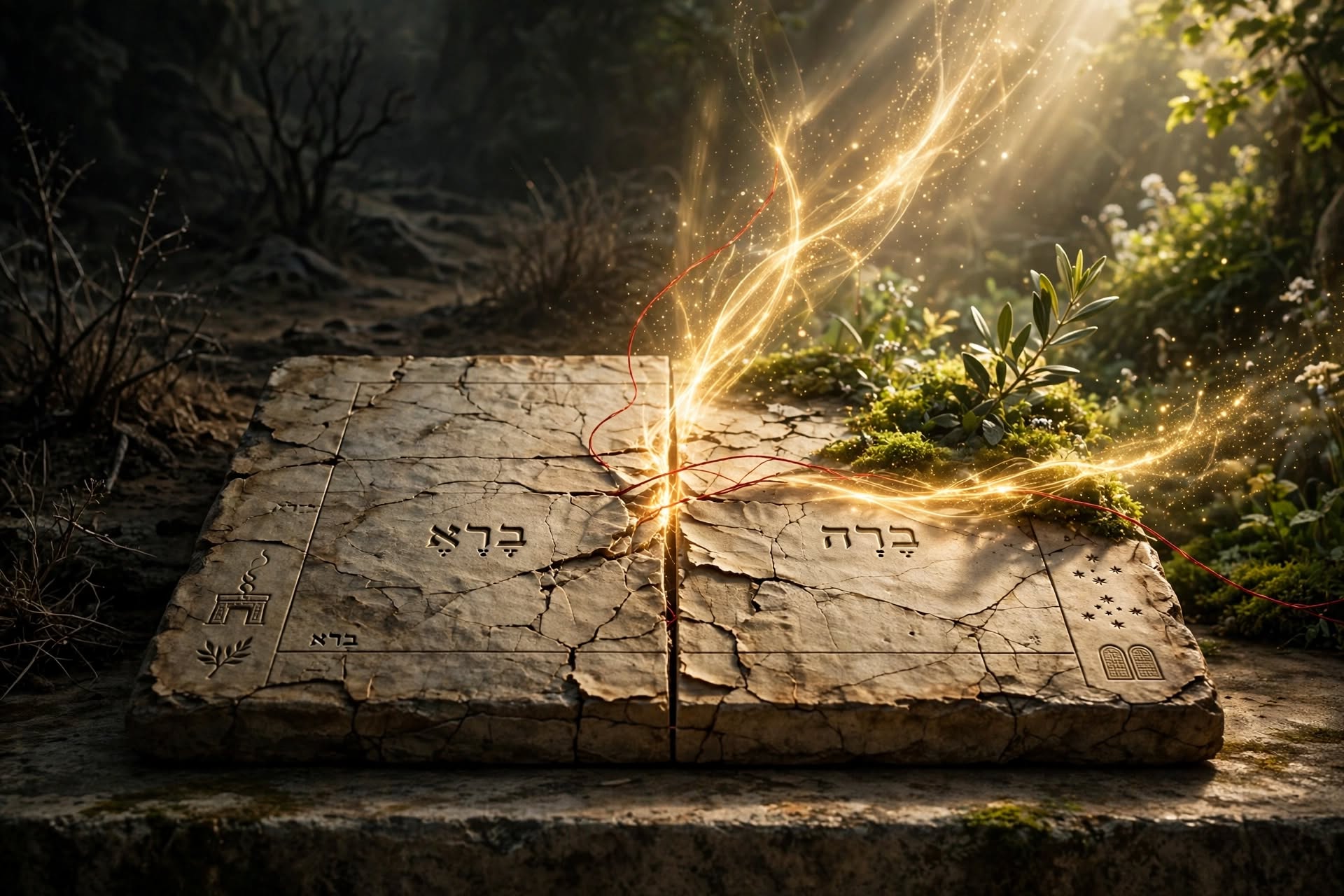
  • Post 8 — Genesis 15: The Covenant of the Pieces

    Post 8 — Genesis 15: The Covenant of the Pieces

    Why Abraham Needed More Than a Promise

    Jim Bibb

    Oct 30, 2026


    In our previous posts, we have followed Abraham through a series of covenant milestones.

    In Genesis 12, Abraham crossed the threshold into the Land and accepted the Father’s covenant promises through the Word.

    In Genesis 14, Abraham entered a covenant meal with Melchizedek, establishing reciprocal covenant obligations and preparing the legal foundation for what would come next. As we saw in the previous post, those obligations involved the pledge of life itself.

    Even with these agreements, Abraham still had a concern. Actually, he had two, and the Father answered them in two very different ways.

    Understanding the difference between those responses is the key to understanding Genesis 15.


    1. Two Concerns, Two Responses

    Genesis 15 opens with Abraham raising two distinct concerns. The first concerns descendants. The second concerns inheritance.

    They are related, but Scripture treats them differently.

    Concern #1: “I Have No Son”

    The Word assures Abraham that his offspring will come from his own body.

    Then He brings Abraham outside and says:

    “Look toward heaven and count the stars, if you are able to count them… So shall your seed be.” (Genesis 15:5, TLV)

    Abraham believes, and Scripture records one of the most famous statements in the entire Bible:

    “Then he believed in Adonai, and He reckoned it to him as righteousness.” (Genesis 15:6, TLV)

    Abraham receives a promise. Abraham believes the promise. The matter is settled.

    No ceremony follows. No covenant animals are required. No legal transaction takes place.

    The Father’s promise, received by faith, answers the first concern.


    Concern #2: “How Will I Know I Will Inherit It?”

    The second concern is different.

    After reaffirming the promise of the Land, Abraham asks:

    “My Lord Adonai, how will I know that I will inherit it?” (Genesis 15:8, TLV)

    This question triggers an entirely different response. The Word does not simply repeat the promise. He initiates a covenant ceremony.

    Why?

    Because descendants are one thing, inheritance is another. The promise of descendants was received by faith. The promise of the Land required a legally binding guarantee.

    Genesis now moves from promise to covenant law.


    2. What Is a Royal Grant?

    To understand what happens next, we need to understand an ancient legal institution known as a royal grant.

    In the ancient Near East, a king could reward a loyal servant with land, privileges, inheritance rights, or permanent protection.

    The gift was not earned through future performance. It was bestowed because of demonstrated loyalty.

    Biblical scholar Moshe Weinfeld observed that the covenant with Abraham follows this same pattern.

    The royal grant is the gift itself. The covenant ceremony secures the gift.

    That distinction matters.

    The grant is:

    • the Land
    • the inheritance
    • the promise

    The covenant ceremony is the legal mechanism that guarantees those things. Genesis 15 is not creating a new promise. It is securing an existing one.


    3. The Strange Request

    The Word now commands Abraham to bring five animals:

    • a three-year-old heifer
    • a three-year-old female goat
    • a three-year-old ram
    • a turtledove
    • a young pigeon

    Abraham obeys.

    The four-legged animals are divided. The birds are left intact. The pieces are arranged.

    Then Abraham waits. Readers familiar with modern worship often assume these animals are simply sacrifices. However, Genesis read in Ancient Near Eastern historical context presents them differently.

    These animals are part of a legal proceeding. A covenant ceremony is being prepared.

    Then something strange happens.

    The covenant appears to pause. The sun begins to set. Darkness falls, and Abraham enters a deep sleep. The tension grows.

    A legal covenant has been prepared, but it has not yet been executed.


    4. Why Doesn’t Abraham Walk Through the Pieces?

    Modern readers often assume both parties should participate because covenants are commonly understood as agreements between two parties. Yet Genesis 15 is not functioning as a parity treaty between equals.

    It is functioning as a royal grant bestowed by the greater party in recognition of prior loyalty. Genesis nevertheless records something unexpected.

    Abraham prepares the covenant. Abraham arranges the pieces, but he never walks through them. Instead, the narrative focuses entirely on the divine side of the covenant.

    As darkness settles, Abraham receives revelation concerning the future affliction, slavery, and eventual deliverance of his descendants. The covenant is clearly about Abraham and his offspring. Yet Abraham remains passive.

    This detail is easy to miss because we are so familiar with the story and it raises an important question:

    Why does Abraham not walk between the pieces?

    The answer will become one of the most important legal revelations in Scripture.


    5. Preparing for the Covenant

    Before explaining who walks through the pieces, Genesis first establishes something else. The covenant concerns inheritance of the Land by Abraham’s descendants. Most importantly, the covenant concerns the Father’s commitment to fulfill what He has promised.

    This is not merely an emotional reassurance. It is a legally binding guarantee. The ceremony is preparing to establish absolute or strict liability by the Word on behalf of the Father.

    Unlike the covenant meal of Genesis 14, which established reciprocal covenant obligations, the covenant of the pieces focuses on who will bear responsibility for ensuring that the royal grant remains legally available to Abraham’s descendants, even if future covenant unfaithfulness creates barriers to its continued fulfillment.

    The Word is about to accept responsibility for ensuring that the royal grant will ultimately be fulfilled in perpetuity.

    That is why Genesis 15 stands at the heart of the biblical covenant story. The issue is no longer whether the Father intends to bless Abraham. The issue is how the royal grant will remain legally secure when future generations create legal obstacles through covenant infidelity.

    The covenant of the pieces exists to answer that question.


    The Cliffhanger Hidden in Genesis 15

    Most readers remember Genesis 15 because of the dramatic imagery.

    The divided animals. The deep sleep. The darkness. The smoking oven and the fiery torch. Before we can understand those symbols, we must answer a far more important question:

    Why does Abraham prepare the covenant pieces but never walk between them?

    The answer reveals who assumes responsibility for the covenant that guarantees the royal grant. Once we understand that answer, we begin to understand why Messiah’s death was not merely an act of love.

    It was the fulfillment of a covenant obligation.

    Closing Thought

    In Genesis 12, Abraham received covenant access.

    In Genesis 14, Abraham entered reciprocal covenant obligations with Melchizedek.

    Now, in Genesis 15, we encounter something different.

    A royal grant with a covenant ceremony, and a question that changes everything:

    Who bears absolute liability for preserving the royal grant when the actions of its recipients later make its continued fulfillment legally impossible?

    In the next post, we’ll examine why the Word alone walked between the pieces, the legal significance of that act, and how the covenant of Genesis 15 ultimately points to Messiah’s death.

    For more information, be sure to check out Israel Divided: Why Jesus Came
  • Post 7 — Meeting Melchizedek: The Covenant Meal That Changed Everything

    Post 7 — Meeting Melchizedek: The Covenant Meal That Changed Everything

    Jim Bibb

    Oct 21, 2026


    In our last post, we explored how Abraham entered covenant relationship with the Father through the threshold covenant. By crossing into the Land and establishing altars, Abraham formally accepted the Father’s promises of provision, protection, inheritance, and blessing.

    Covenant relationships do not end at the threshold. They deepen through additional agreements. Genesis 14 records the next major step in Abraham’s covenant journey, an encounter with one of the most mysterious figures in Scripture.

    Melchizedek.

    Most discussions focus on a single question:

    Who is Melchizedek?

    While that question matters, an equally important question is often overlooked: What commitments were exchanged through the bread and wine covenant meal he had with Abraham (then Abram)?

    The answer may determine whether Genesis 15 is a profound covenant ceremony or an impossible legal contradiction.


    1. The Mystery of Melchizedek

    After rescuing Lot and defeating the coalition of kings, Abraham is met by a figure unlike any other in the biblical narrative:

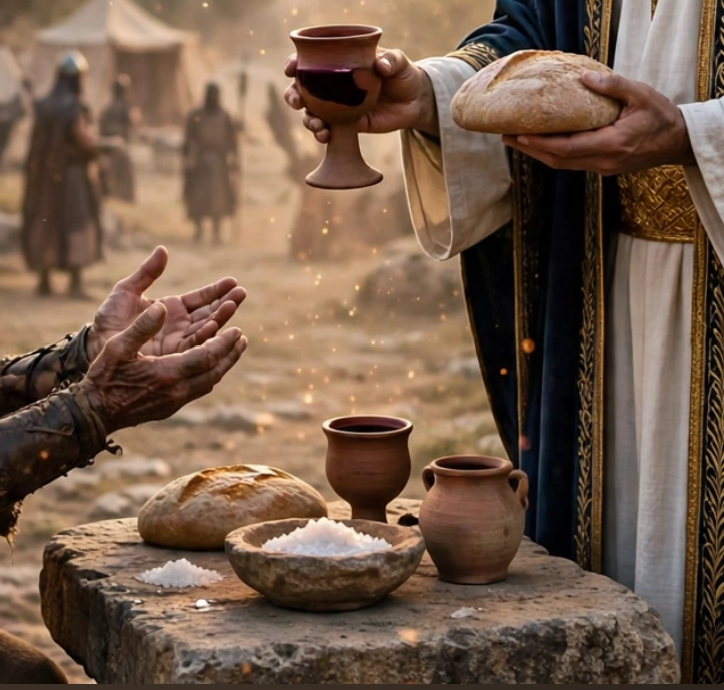
    “Then Melchizedek king of Salem brought out bread and wine. Now he was kohen of El Elyon.” (Genesis 14:18, TLV)

    Melchizedek appears suddenly. No genealogy is given. No ancestry is provided. No explanation accompanies his arrival.

    Later rabbinic tradition identified Melchizedek with Shem, the son of Noah. Yet Genesis itself never makes that claim. Instead, the text seems intentionally designed to draw attention away from genealogy and toward priesthood and authority.

    The author of Hebrews later emphasizes this same mystery, describing a priesthood not rooted in ancestry but in divine appointment. The mystery is significant because covenant authority in Scripture flows from the Father through the Word. If Melchizedek is functioning within that covenant structure, then his role in Genesis 14 may be far greater than many readers realize.

    The question is not merely:

    Where did Melchizedek come from?

    The larger question is:

    Why did Abraham need to meet him before the royal grant, confirmed by a covenant of the pieces, in Genesis 15?


    2. This Was Not Hospitality

    Most modern readers assume Melchizedek brought bread and wine simply to refresh Abraham after battle. The ancient world would have understood something very different.

    Much of the covenant background discussed in this article comes from the work of H. Clay Trumbull. His three major studies, The Blood Covenant (1885), The Threshold Covenant (1896), and The Salt Covenant(1899), are now in the public domain and freely available online. Together they document how blood, thresholds, covenant meals, and salt functioned as legal instruments throughout the ancient world.

    Drawing heavily on evidence assembled in The Blood Covenant and The Salt Covenant, covenant meals were not merely social events. They established obligations, loyalty, representation, protection, and belonging.

    Bread and wine were not refreshments. They were covenant tokens.

    Melchizedek was not offering hospitality. He was offering covenant.

    Genesis 14 is not describing a celebratory meal after military victory. It is recording a legal transaction.


    3. What Did Melchizedek Offer Abraham?

    Throughout Scripture, covenant relationships follow a consistent pattern.

    The greater party offers:

    • provision
    • protection
    • inheritance
    • blessing

    The lesser party responds with:

    • loyalty
    • fidelity
    • obedience
    • covenant participation

    That pattern first appeared in Genesis 12.

    The Father, through His Word, offered Abraham:

    • land
    • blessing
    • descendants
    • inheritance

    Abraham responded by crossing the threshold and entering covenant. Now the covenant deepens.

    Melchizedek blesses Abraham:

    “Blessed be Abram by El Elyon, Creator of heaven and earth, and blessed be El Elyon, who gave over your enemies into your hand.” (Genesis 14:19-20, TLV)

    This blessing is far more than encouragement. It is a legal affirmation that the covenant remains in force. The bread, wine, and salted covenant meal establish continuing relationship between the parties.

    The threshold covenant granted access. Genesis 14 establishes covenant loyalty.


    4. What Did Abraham Offer Melchizedek?

    Abraham’s response is often treated as a lesson about tithing. Yet Genesis is doing something much larger.

    Abraham gives Melchizedek a tenth of everything. This is not payment. It is acknowledgment. It is covenant reciprocity.

    The greater party offers blessing. The lesser party offers loyalty. Abraham publicly acknowledges Melchizedek’s authority and priesthood. The covenant meal therefore creates obligations on both sides.

    This is one of the most important principles of covenant. Provision requires fidelity. Protection requires loyalty. Inheritance requires covenant participation.

    Genesis 14 records Abraham’s willing acceptance of those obligations.


    5. Why Bread and Wine?

    The elements themselves matter. Bread speaks of flesh. Wine speaks of blood. Salt speaks of permanence. Together they form a covenant package communicating life, loyalty, and enduring commitment.

    According to Trumbull’s research, bread and salt shared between covenant partners frequently represented enduring loyalty, while blood and its symbolic substitutes represented pledged life and covenant obligation.

    Yet the significance of Genesis 14 extends beyond symbolism. Within the covenant architecture established in Genesis 12-15, bread, wine, and salt accomplish something legally necessary.

    The threshold covenant of Genesis 12 established access. The covenant meal of Genesis 14 established reciprocal covenant obligations. Through this meal Abraham and Melchizedek entered reciprocal obligations involving life, loyalty, representation, and covenant faithfulness.

    This is why the identity of Melchizedek matters so much. If Melchizedek is merely another priest, Genesis 14 becomes an important covenant meal. If Melchizedek is the Word functioning as priest on behalf of the Father, Genesis 14 becomes indispensable.


    6. The Legal Problem Approaching in Genesis 15

    Most readers encounter Genesis 15 and focus on the dramatic image of the smoking oven and fiery torch passing between the pieces.

    Yet a legal problem hides beneath the story. Genesis 15 requires a participant willing to accept a death-penalty covenant. The one who walks through the pieces assumes liability. The one who walks through the pieces must ultimately be capable of satisfying that liability.

    Yet the Word, acting as the Father’s representative, is not mortal. How can the Word lawfully commit to a covenant obligation that culminates in death? Genesis 14 provides the answer.

    The covenant meal establishes more than loyalty. It establishes legal reciprocity between Abraham and Melchizedek.

    In the framework developed throughout Israel Divided: Why Jesus Came, this encounter becomes the moment the Word receives legal standing to participate in Abraham’s covenant line and ultimately assume covenant liability as Abraham’s promised Seed.

    Without Genesis 14, Genesis 15 becomes difficult to explain. Without Genesis 14, the covenant of the pieces lacks a necessary legal foundation. Without Genesis 14, the later appearance of Messiah as both the Seed of Abraham and the bearer of covenant liability appears disconnected from the Abrahamic covenants.

    Genesis 14 therefore is not an isolated story. It is preparation. It is the legal foundation upon which the covenant of the pieces will be built.

    Closing Thought

    The threshold covenant of Genesis 12 established covenant access.

    The covenant meal of Genesis 14 established reciprocal covenant obligations.

    The greater party offered blessing, provision, protection, and inheritance.

    The lesser party responded with loyalty, fidelity, and acknowledgment.

    Covenant reciprocity alone was not enough.

    A royal grant also required responsibility for covenant failure.

    If Melchizedek is merely a mysterious priest, Genesis 14 remains fascinating.

    If Melchizedek is the Word acting in priestly function between the Father and Abraham, Genesis 14 becomes one of the most important covenant scenes in Scripture because it establishes the legal foundation for everything that follows.

    In the next post, we will examine the covenant of the pieces in Genesis 15 and discover why the Word alone walked between the sacrifices, accepting a covenant obligation that would ultimately require His death.

  • Post 3 — What Covenant Actually Is: Cutting, Restoration, and the Father’s Blueprint for Return

    Post 3 — What Covenant Actually Is: Cutting, Restoration, and the Father’s Blueprint for Return

    Jim Bibb

    Sep 09, 2026

    Most people hear the word covenant and think of relationship, promise, or spiritual commitment. In Scripture, covenant is far more precise. It is legal, physical, and restorative. It is the Father’s chosen mechanism for reconciling humanity back to Himself after Eden; a legal mechanism rooted in blood, boundaries, and renewal.

    Post 2 explained why humanity needed covenant. This post explains what covenant actually is. Once we understand that context, the entire biblical story from Noah to Abraham, from Sinai to Messiah, begins to become clearer.

    1. Covenant Begins With Cutting

    The Hebrew word for covenant, berit, carries two foundational meanings at its root:

    · bara — to cut, to open

    · barah — to rejuvenate, to restore

    This means covenant is not merely agreement. It is incision and renewal bound together. A covenant is enacted by a cut; a boundary, an opening, a legal act that accesses blood. Then that blood becomes the medium through which restoration happens.

    This is why covenant is always physical. It always involves flesh. It always involves blood or its legally recognized substitutes.

    Covenant is not sentiment. It is the Father’s authorized legal structure and pathway for meaningful relationship within created time and space and the only way for humanity’s eventual restoration and return to Him.

    2. Why Covenant Requires Blood

    After Eden, humanity was clothed in skin (עוֹר) — flesh designed to contain blood, which became:

    · humanity’s lifeforce

    · and the legal currency of covenant

    Blood is not symbolic. It is juridical. In ancient Near Eastern law, and in Scripture, blood marks:

    · thresholds

    · boundaries

    · altars

    · entrances

    · agreements

    · identity

    · belonging

    Blood is what binds two parties together under law. This is why the Father gave humanity skin and blood immediately after withdrawing His glory. Humanity needed a medium through which covenant could operate. Blood became the legal access point for restoration.

    3. Covenant Is the Father’s Blueprint for Return

    Once humanity lost glory and could no longer endure the Father’s fullness, covenant became the only lawful path back.

    Covenant provides:

    · jurisdiction — who belongs to Him

    · access — how we approach Him

    · restoration — how broken relationship is healed

    Covenant is the Father’s architecture for reconciliation. It is the structure that allows humanity to cross the threshold back toward Him, eventually all the way back to the Garden, back to glory, back to the presence we lost. Without covenant, there is no legal mechanism for return.

    4. Covenant Always Moves Toward Restoration

    Because barah means “to rejuvenate, to restore,” covenant always aims at renewal. But covenant does not begin in Eden. Eden creates both the need for covenant and the mechanism that makes covenant possible. Humanity moves from light to skin, from glory to flesh, from direct presence to mediated presence. Blood becomes the legal medium of restoration, and flesh becomes the place where cutting can occur, but no covenant is enacted.

    The first covenant Scripture names is Noah’s, after the flood. From that point forward, every covenant follows the same pattern:

    · a cut

    · blood accessed

    · restoration initiated

    Noah, Abraham, Sinai, and ultimately Messiah all follow this sequence. Eden is the origin of the need and the mechanism for covenant; Noah’s altar, following the flood, is the scriptural origin of covenant activation.

    5. Covenant Anticipates Messiah

    The flesh and blood given to Adam and Eve were not random. They anticipated the flesh and blood of Messiah, the One who would:

    · enter skin

    · shed blood

    · and restore humanity to glory

    Covenant begins in Eden, but it points forward to the moment when the Word Himself would take on flesh and activate the covenant that returns humanity to the Father. Covenant is the bridge.

    Messiah is the One who creates capacity for covenant in the Garden, activates the better covenant through His blood, and prepares the way for the future renewal of the Jeremiah 31 covenant for the Twelve Tribes of Israel.

    Closing Thought

    Covenant is not abstract, symbolic, or emotional.

    It is the Father’s legal and relational blueprint for reconciliation; a structure built on cutting, blood, and restoration. Once humanity lost glory and received skin and blood, covenant became the only lawful path of return.

    This foundation prepares us for the next step in the story: understanding how Scripture uses the same word for two distinct covenants, one renewed and national, the other better and eternal, even though they serve different purposes and unfold on different timelines.

    Post 3 simply sets the stage. In the next post, we will explore how these covenants differ, how they work together, and how Messiah fulfills both in their proper order.